

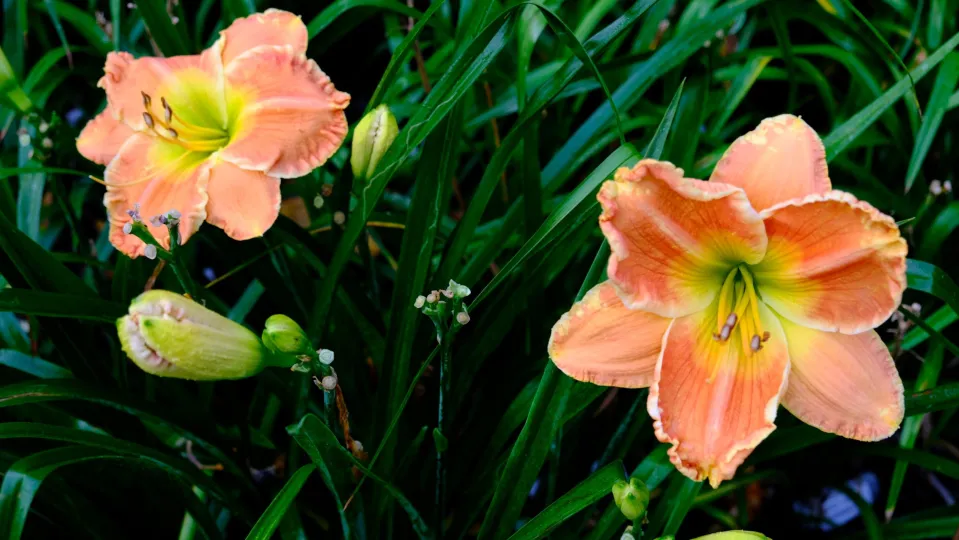
Try tending an empty border before you buy the plants. Take the chair, stool or wheeled aid you use in the garden to the position where you expect to work. Put a pot where a daylily crown might sit and see whether you can reach its base with one hand. Place a peg where the leaves of a mature clump will end. Then take the route back to the tap. This short rehearsal often changes a drawing. A well-placed seat might make the near edge comfortable to tend, while a wide coping stone leaves the plants farther away than they looked on paper. The measurements to keep are the ones that work when you carry out the jobs you expect to do throughout summer.
Make the Approach Easy to Use
Plant choice starts to matter once you know how you will approach the border. In its growing guide, SwallowtailDaylilies, a premier grower of daylily plants, suggests smaller-growing varieties for edging and raised beds. It describes the leaves as arching and explains that the height quoted for a variety refers to its flower stems, with the foliage usually lower. Use both parts of that description when you draw the border. A short flower stem suits some viewing positions, and a broad arc of leaves still needs room inside the edge. Look for an established clump of the cultivar or ask about its spread before fixing the position of the crown. If a part of the bed sits close to the point where you turn or put a chair, give the leaves enough space to develop without taking up that working area. Check that the plant is easy to reach from the position that remains.
Begin at the door or gate you usually use, with the equipment you ordinarily take outdoors. Travel the entire route in both directions. Look at changes in level, bends and thresholds as well as the stretch beside the plants. An approach that feels wide in the middle may narrow exactly where you need room to get around a projecting gate latch. A turn beside the bed needs space for whatever moves with you, including a walking frame or the handles of a wheelbarrow.
Thrive’s guidance on wheelchair-friendly gardens favours firm, even surfaces and warns that wheels can sink or spin in loose gravel. Take the condition of your own surface into account after rain. If a paving slab rocks or a place collects water, deal with that spot before treating the rest of the approach as ready. Leave a clear place to pause without blocking the route. A chair or stool needs a stable place to sit when it is in use and somewhere it can be put when people are passing.
Imagine you can reach the plants from a broad terrace but have to reverse halfway back from the far end. A shorter border with a clear turning space might make more of the bed usable. If there is a way to connect the path to an existing route behind the planting, a continuous circuit is another option. Check how the route works around the space you have, including where a gate swings and where the pots you use for other plants will stand.
For shared gardens, walk or roll around the proposal with the people who will actually work there. A route that feels comfortable to one person on a dry afternoon may ask for different clearances or a different surface for someone else. Mark the useful space on the plan as carefully as you mark the planting area.
Measure Reach From the Working Position
Check reach while seated or standing in the position you expect to use. Touch a marker at the proposed crown, then touch another at the back of the clump. Try the movement with a small hand tool you already use. Taking off a spent flower is an occasional reach. Clearing several leaves or working soil around a crown can involve repeating the same movement, so use the comfortable repeated reach to set the width of the bed.
Measure from the actual working position. A thick raised-bed wall, the arm of a chair and space for feet or wheels can all add distance between the body and the soil. Put a box the width of the planned wall between your seat and the trial pot to see what that changes. If the bed could only be reached from the front, place routine jobs within the comfortable range of that side. A bed with equally convenient access from front and back gives you more freedom to arrange the clumps.
When you compare daylily plants for sale, think about which parts of the plant you will have to reach. An easy-to-see flower may sit on a tall stalk while the part you need to inspect is the cluster of leaves at soil level. Set the nearest plant where you can clear spent foliage at the base, and leave enough space between clumps to work a hand or tool through. Check the established size of the specific cultivar, especially if you want a second row.
If the back strip remains out of reach, change what that strip asks of you. A low-maintenance background planting with an approach of its own might suit it. Bringing the ornamental work closer and giving up a little planting depth is often the simplest option. Moving the border line while it is still marked with string costs very little.
Try the Height With the Tools You Use
A raised bed lets you bring the soil up to a comfortable height. The useful height depends on what you want to do, whether you work seated and how close the seat will come to the edge. Set a pot on a secure surface at two or three candidate heights and see how it feels to reach across the rim. Include a low task such as touching the soil and a higher one such as inspecting the flower. The two need different amounts of reach.
A straight-sided raised bed offers space and soil volume for a permanent planting. Its face can also keep knees or a wheelchair farther from the soil. Thrive describes elevated planters and growing tables as options where the gardener can bring a chair closer or partly underneath. Check the clearance on the actual design and test whether the planter gives enough depth, spread and drainage for the daylily you want. A conveniently positioned shallow table may be better reserved for small work such as sowing or sorting labels.
There is also a workable middle ground. A low raised bed with a broad, stable working position beside it can reduce bending for a person who likes to change between standing and sitting. Smaller pots on a suitable sturdy raised platform keep individual plants within reach where a permanent bed is impractical. Plants in containers need checking and watering during dry weather, so see whether raising them introduces an awkward journey to a tap.
Think about the view at the height you are choosing. Flowers on tall stems in a high bed may be easy to see at eye level but harder to reach when you want to remove them. A mock stalk made from a cane shows where a bloom would sit above the bed. Use it to compare two positions with the same seat and see which gives you the view and reach you want.
Allow for the Sweep of Mature Leaves
The leaves of a daylily arch out from its base. A nursery plant in a small pot gives only a partial picture of the amount of path or work space an established clump will need. Find a whole-plant image with scale or look at the same cultivar when grown outdoors. Descriptions sometimes emphasise diameter of the flower or height of the flowering stalk. Ask separately about the width of the foliage and see whether the lower leaves stand upright or sweep close to the ground.
Put two marks beside each planting position, one for the crown and one for the edge of the expected foliage. Try the route with the larger outline in place. At a bend or beside a seat, give yourself some margin to pass a clump on a busy day when tools or other pots are present. Leave extra room where two clumps will grow towards one another across an area used for access. In a shallow border the space you hold back from planting can make tending the remaining plants easier.
Try the same check after rain when checking an existing garden. Heavy wet leaves may lie farther into a passage, and you will want a clear approach even while flowers are at their best. If a mature clump regularly sweeps into the path, move it farther in or consider dividing it when the appropriate season comes round. It helps to work out in advance whether you have a position for the divisions and whether lifting them is a job you can arrange when the time comes.
Leave some bare room at the edge of a new planting. Smaller companion plants can fill useful gaps provided you know where their mature spread will finish. A repeating space gives each daylily room to show its foliage and lets you approach individual plants without pushing another out of the way.
Keep Water and Tools Within Easy Reach
Rehearse a short visit with a watering can and the tools you would actually take. The garden may provide a convenient place to sit by the plants and still involve a long or awkward trip to fill the can. Notice what happens when you need one hand to steady yourself or operate a gate. A small can carried more often is easier for some gardeners. Others find a lightweight hose more practical if it has a clear, convenient route.
Set aside a place to rest tools at the height you prefer. It might be a stable ledge next to the seat or a shelf which you can approach from the same side every time. Put it close enough to use without twisting into the bed. Try leaving a small pair of secateurs there during the rehearsal and check whether you would be able to pick them up after moving along the border. Give the working surface a place of its own so tools stay out of the route.
Plan where the hose will go during and after use. A hose left across the approach can turn the clearest path into an awkward crossing. A route along the outside of the bed with a simple place to put the hose away helps keep the approach clear. For a remote bed, a properly installed watering line can reduce trips during establishment. Check that its controls are accessible and that you can see what water reaches the plants.
The first weeks after planting involve frequent checks of moisture, especially in dry weather. Test whether you can reach the soil near the root ball as well as turn the tap and put the equipment away. A closer bed may make those routine visits easy enough to fit into the day. If you need a nearby shelf or a different tap arrangement to make the job workable, include it in the plan.
Test One Section Before Planting the Rest
In a small garden, a clear first project might be two clumps within reach of a single working position. Mark the mature plants on the ground and take a few ordinary trips to the spot. See how the route changes when the garden is wet or when someone else is on the path. If you cannot comfortably tend the space you have marked, change the shape, create a second approach or use fewer plants. Those are easier decisions at this stage than after a border fills out.
A shared border sometimes needs two useful places to work. A relative who likes to stand might be comfortable at one end of a long bed, while a gardener who works seated reaches more easily from a wider bay. Reserve the central planting for plants that both gardeners can tend from their usual position, or give each side its own group. Where unequal heights work better, two short beds can give the same repeated flower colour across the garden without asking everyone to work at the same level.
Plant the first section and watch it through a spell of ordinary care. Look at how the leaves fill their space and how often you move the chair, hose or tools to get to the plants. If one job is uncomfortable, use that experience to change the next section. A path adjustment solves a different problem from a smaller cultivar or an easier supply of water. Extend the arrangement once the approach stays clear, the reach remains comfortable and the daily work fits the way you like to garden.
